World Athletics rule change = confusion and sadness.
Thomas Solomon PhD.
10th Feb 2020.
Please retweet or share this article with anyone who will find it educational:
Reading time ~10-mins (1100-words).
Or listen to the Podcast version.
For endurance running, the last couple of years of performances have been rather exciting. But the excitement has been largely fuelled by technological advances. Speed skating had the clap skate and swimming had the full-body LZR suit. While the latest technological advance in running is cool, does it come at a cost and do we any longer know what we are watching?
Since the recent arrival of certain high stack-height, carbon fibre-laden, swoosh-clad shoes, world records have tumbled and expected race finish times at the front end of elite fields have dropped remarkably. Anecdotally, athletes are not only faster but those who wear said shoes proclaim they feel swift and effortless.
Professional athletes not sponsored by “the swoosh” are at a disadvantage. To that end, there are rumours of some professional athletes wearing the performance-enhancing shoes disguised as their own sponsor's brand.
I take issue because I do not know what I am watching. Recent records are a result of technological advantages, which are innovative and cool but, personally, I watch endurance sport to see what the human body is capable of and not to see what technology can do. If I want to watch a technological spectacle, I watch Formula One.
Among the recent madness, World Athletics, formerly known as the IAAF, finally made an amendment to their rule book. To check out the update, issued on the 31st Jan 2020, go to: worldathletics.org/about-iaaf/documents/book-of-rules then locate Book C: Competition: C2.1 — Technical Rules and go to pages 6 to 8 in the PDF file.
What does the rule update say?
Section 5.2
They [the shoes] must not give athletes any unfair assistance or advantage.
— Firstly, it is important to know that this was the same rule that stood in the previous version of the rules. Secondly, the shoes that have prompted this change in the rule book have been shown to improve running economy somewhere in the region of 2 to 6%, which is enormous. So, the shoes that triggered the recent debate and eventual ruling are actually very likely to provide an “unfair advantage”.
Any type of shoe must be reasonably available to all in the spirit of the universality of athletics. To meet that requirement, any shoe that is first introduced after 30 April 2020 may not be used in competition unless and until it has been available for purchase by any athlete on the open retail market (i.e. either in store or online) for at least four months prior to that competition. Any shoe that does not meet this requirement is deemed a prototype and may not be used in competition.
— Because of this amendment, other brands must now “race” (pun fully intended) to release their rival shoes.
Where World Athletics has reason to believe that a type of shoe or specific technology may not comply with the letter or spirit of the Rules, it may refer to the shoe or technology for detailed examination and it may prohibit the use of such shoes or technology in competition pending examination.
— Well that is incredibly vague. Perhaps a get-out clause if a brand is innovative (very likely) and able to maneuver around the rules (highly probable).
Section 5.5
In the High Jump and Long Jump, the sole shall have a maximum thickness of 13mm, save that in High Jump the sole beneath the heel shall have a maximum thickness of 19mm. Subject to Rule 5.13, in all other events, the sole and/or heel may be of any thickness.
— This is also rather interesting because the rule about the high jump and long jump is not new and has existed for many moons. But it does prompt the question, “why is sole thickness not an issue in other events?”, given that in order to fit a carbon plate of the correct dimensions into a running shoe, a thickness of 13 mm or less is insufficient to boost running economy?
— Also, why are technological advances being allowed in running events but not in the high jump or long jump? If we, the people, want to see people run a 1:59 marathon, why not also long for a 3-metre high jump or a 10-metre long-jump?
So, what is rule 5.13?
Rule 5.13. Until further notice, unless specifically agreed by World Athletics in writing, any shoe used in competition:
5.13.1 (save for where Rule 5.13.2 applies) must not contain more than one rigid plate or blade made from carbon fibre or another material with similar properties or producing similar effects, whether that plate runs the full length of the shoe or only part of the length of the shoe; and
5.13.2 may contain one additional rigid plate or other mechanism only where used solely to attach spikes to the outer underside of the shoe; and
5.13.3 must have a sole with a maximum thickness of no more than 40mm (save that any shoe that contains spikes must have a sole with a maximum thickness of no more than 30mm).
Note (i): See the notes to Rule 5.5 for information about measurement of the shoe sole thickness.
Note (ii): The one rigid plate or blade referred to in Rule 5.13.1 may be in more than one part but those parts must be located sequentially, in one plane, not in parallel (i.e., not stacked above each other), and must not overlap.
— So, to summarise rule 5.13, a running shoe sole can be as thick as 40 mm and may have a single plate or blade which may be divided into parts but not side by side or stacked.
If you read on through the rule update, within section 5 there is a guide on how to precisely measure the sole thickness. So, I guess it is now up to the race referees to enforce this rule.
But this creates a problem.
Will we see every athlete's shoe sole thickness being measured immediately prior to every race, a bit like the referee checking the studs of a soccer player's boots before walking onto the pitch?
Highly unlikely.
Will we see race referees cutting into athlete's shoes immediately prior to every race or taking out their pocket X-ray machine to check that the shoe's plates/blades meet the rule?
Definitely not.
Overall, this is an odd but not terribly surprising ruling. The rule “update” will be very difficult to monitor and is not in line with World Athletics' own rule that “They [the shoes] must not give athletes any unfair assistance or advantage” (section 5.2).
I will continue to watch “the race of the branded feet” while basically giving up on the hope of witnessing what is possible within the limits of human physiology — we will never now find that out. Reminiscent of the days when I discovered cycling only to have reality punch me in the face that pharmaceutical ergogenic aids were the fuel behind the astounding advances in power to weight ratios. Now, in the world of athletics, technological ergogenic aids will too become widespread and “normal” which, as it turns out, will be fully accepted by the power of World Athletics.
Thanks for joining me to hear my viewpoint. Until next time, keep thinking outside the box and keep training smart.
Photo credit: Ben Stern on Unsplash.
Disclaimer: I occasionally mention brands and products but it is important to know that I am not affiliated with, sponsored by, an ambassador for, or receiving advertisement royalties from any brands. I have conducted biomedical research for which I have received research money from publicly-funded national research councils and medical charities, and also from private companies, including Novo Nordisk Foundation, AstraZeneca, Amylin, A.P. Møller Foundation, and Augustinus Foundation. I’ve also consulted for Boost Treadmills and Gu Energy on their research and innovation grant applications and I’ve provided research and science writing services for Driftline and Examine — some of my articles contain links to information provided by Examine but I do not receive any royalties or bonuses from those links. These companies had no control over the research design, data analysis, or publication outcomes of my work. Any recommendations I make are, and always will be, based on my own views and opinions shaped by the evidence available. My recommendations have never and will never be influenced by affiliations, sponsorships, advertisement royalties, etc. The information I provide is not medical advice. Before making any changes to your habits of daily living based on any information I provide, always ensure it is safe for you to do so and consult your doctor if you are unsure.
If you find value in this free content, please help keep it alive and buy me a beer:
Want free exercise science education delivered to your inbox? Join the 100s of other athletes, coaches, students, scientists, & clinicians and sign up here:
About the author:
I am Thomas Solomon and I'm passionate about relaying accurate and clear scientific information to the masses to help folks meet their fitness and performance goals. I hold a BSc in Biochemistry and a PhD in Exercise Science and am an ACSM-certified Exercise Physiologist and Personal Trainer, a VDOT-certified Distance running coach, and a Registered Nutritionist. Since 2002, I have conducted biomedical research in exercise and nutrition and have taught and led university courses in exercise physiology, nutrition, biochemistry, and molecular medicine. My work is published in over 80 peer-reviewed medical journal publications and I have delivered more than 50 conference presentations & invited talks at universities and medical societies. I have coached and provided training plans for truck-loads of athletes, have competed at a high level in running, cycling, and obstacle course racing, and continue to run, ride, ski, hike, lift, and climb as much as my ageing body will allow. To stay on top of scientific developments, I consult for scientists, participate in journal clubs, peer-review papers for medical journals, and I invest every Friday in reading what new delights have spawned onto PubMed. In my spare time, I hunt for phenomenal mountain views to capture through the lens, boulder problems to solve, and for new craft beers to drink with the goal of sending my gustatory system into a hullabaloo.


 Section 5.2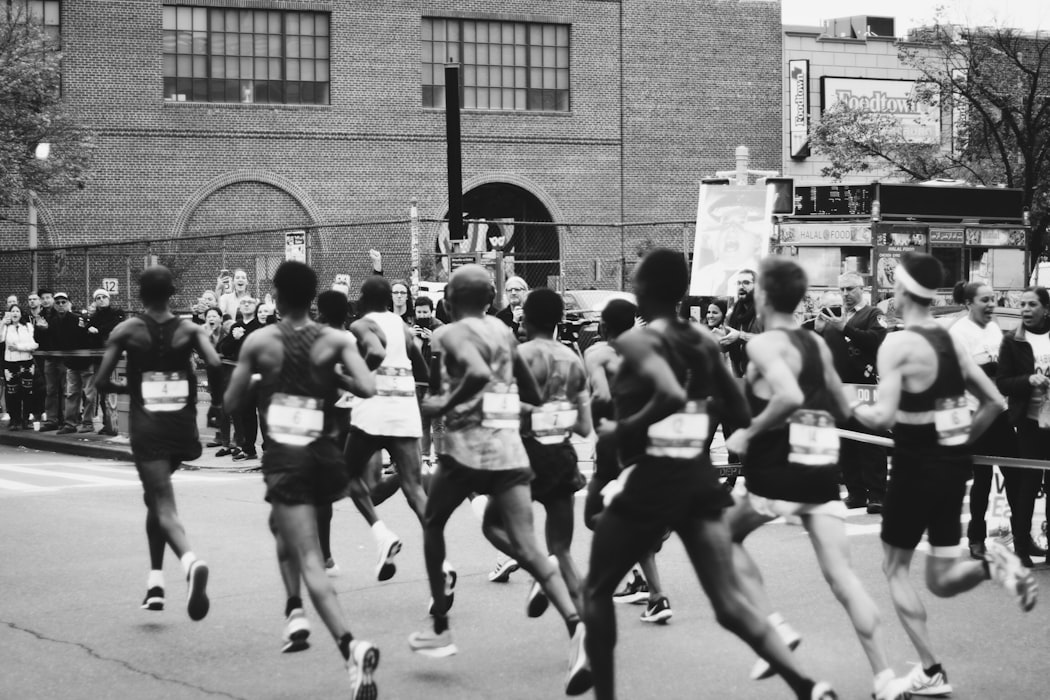
 Buy me a beer.